
Home
1830
1839-05-11: Ontario passes “An Act to Authorise the Erection of an Asylum within this Province for the Reception of Insane and Lunatic Person.”
1860
1865: First proto-eugenics articles by Francis Galton in MacMillan's Magazine
1866-02-20: Gregor Mendel publishes his paper, “Versuche über Pflanzenhybriden”
1867: Ugly Laws
1867: Canadian Constitution Act gives federal parliament legislative authority over "Indians, and Lands reserved for Indians"
1869: Galton publishes Hereditary Genius
1870
1870: Canadian Residential Schools in operation
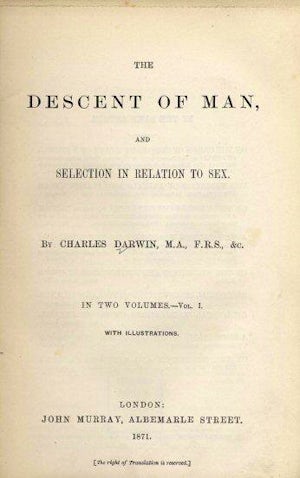
1871: Charles Darwin publishes The Descent of Man

Idaho passed its first sterilization law, limiting sterilizations to those in institutions

Idaho passed its first sterilization law, limiting sterilizations to those in institutions

1918. The Legislature of Idaho passes "An Act to prevent the procreation of feeble-minded, insane, epileptic, moral de-generates and sexual perverts, who may be inmates of institutions maintained by public expense, by authorizing and providing for the sterilization of persons with inferior hereditary potentialities." The aim of the bill was the compulsory sterilization of various persons considered to be mentally and physically unfit living in state institutions.

The bill has several components. First, it gives the following list of conditions as grounds for sterilization: feeble-mindedness, insanity, epilepsy, moral degeneracy, sexual perversion.

Second, in terms of whose responsibility it was to participate in evaluating candidates for sterilization, the bill outlines that the superintendent needed to compile cases of individuals thought to have "undesirable" potentially hereditary traits and the Department of Public Welfare needed to examine such cases and decided if such individuals met the requirements for sterilization (Laughlin, pp. 48-49).

Third, the bill specifies how the examiners can decide on a sterilization. First, the traits of an individual need to be hereditary, that is, they would pass them on if they had children; second, the individual's traits need to be an "menace" to society; third, the sterilization surgery would benefit or "improve" the individual's condition in some way; and finally, the surgery wasn't for punitive reasons (Laughlin, p.49).

Finally, the bill details how the process for sterilization needed to be carried out. If the Department of Public Welfare decided a sterilization procedure was required, then a copy of the sterilization order had to be given to the guardian(s) of the sterilization candidate. The reason for this was that an appeal process needed to be made available should either the candidate or the guardians object to the decision of the Department of Public Welfare. In the case that such an appeal was made, a District Court had to then uphold the Department of Public Welfare's decision. If these procedures were followed, assuming an appeal was made, then a sterilization procedure could be performed (Laughlin, p.49).

-Luke Kersten & Caroline Lyster

  • Laughlin, H.H. (1922). Eugenical Sterilization in the United States. Psychopathic Laboratory of the Municipal Court of Chicago.

Idaho passed its first sterilization law, limiting sterilizations to those in institutions

Idaho passed its first sterilization law, limiting sterilizations to those in institutions

1918. The Legislature of Idaho passes "An Act to prevent the procreation of feeble-minded, insane, epileptic, moral de-generates and sexual perverts, who may be inmates of institutions maintained by public expense, by authorizing and providing for the sterilization of persons with inferior hereditary potentialities." The aim of the bill was the compulsory sterilization of various persons considered to be mentally and physically unfit living in state institutions.

The bill has several components. First, it gives the following list of conditions as grounds for sterilization: feeble-mindedness, insanity, epilepsy, moral degeneracy, sexual perversion.

Second, in terms of whose responsibility it was to participate in evaluating candidates for sterilization, the bill outlines that the superintendent needed to compile cases of individuals thought to have "undesirable" potentially hereditary traits and the Department of Public Welfare needed to examine such cases and decided if such individuals met the requirements for sterilization (Laughlin, pp. 48-49).

Third, the bill specifies how the examiners can decide on a sterilization. First, the traits of an individual need to be hereditary, that is, they would pass them on if they had children; second, the individual's traits need to be an "menace" to society; third, the sterilization surgery would benefit or "improve" the individual's condition in some way; and finally, the surgery wasn't for punitive reasons (Laughlin, p.49).

Finally, the bill details how the process for sterilization needed to be carried out. If the Department of Public Welfare decided a sterilization procedure was required, then a copy of the sterilization order had to be given to the guardian(s) of the sterilization candidate. The reason for this was that an appeal process needed to be made available should either the candidate or the guardians object to the decision of the Department of Public Welfare. In the case that such an appeal was made, a District Court had to then uphold the Department of Public Welfare's decision. If these procedures were followed, assuming an appeal was made, then a sterilization procedure could be performed (Laughlin, p.49).

-Luke Kersten & Caroline Lyster

  • Laughlin, H.H. (1922). Eugenical Sterilization in the United States. Psychopathic Laboratory of the Municipal Court of Chicago.