
Home
1830
1839-05-11: Ontario passes “An Act to Authorise the Erection of an Asylum within this Province for the Reception of Insane and Lunatic Person.”
1860
1865: First proto-eugenics articles by Francis Galton in MacMillan's Magazine
1866-02-20: Gregor Mendel publishes his paper, “Versuche über Pflanzenhybriden”
1867: Ugly Laws
1867: Canadian Constitution Act gives federal parliament legislative authority over "Indians, and Lands reserved for Indians"
1869: Galton publishes Hereditary Genius
1870
1870: Canadian Residential Schools in operation
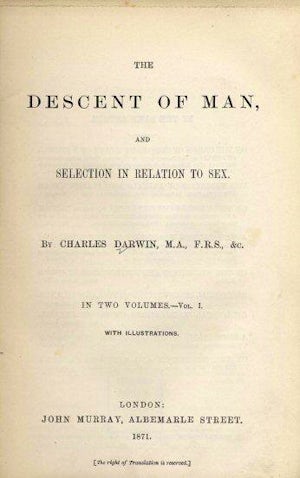
1871: Charles Darwin publishes The Descent of Man

August Weisman publishes The Germ Plasm

August Weisman publishes The Germ Plasm

1893. August Weismann publishes The Germ Plasm. His germ plasm theory states that inheritance only takes place through germ cells (gametes, such as egg or sperm cells) and not through the somatic cells (the cells forming organs, bones or other tissue) that carry out an organism's functions. This theory refuted the Lamarckian concept that organisms can pass down characteristics acquired during their lifetime to their offspring and offered support to Darwin's theories of evolution. It is considered one of the scientific origins of eugenic thought.

This theory was successful in convincing a majority of scientists, and was therefore highly influential. Weisman's theory was also used by degeneracy theorists to support negative eugenics (Carlson, n.d.).

This book may be read online.

-Amy Dyrbye

  • Carlson, E. (n.d.). Scientific Origins of Eugenics. Image Archive on the American Eugenics Movement. Retrieved from http://www.eugenicsarchive.org/html/eugenics/essay2text.html.

August Weisman publishes The Germ Plasm

August Weisman publishes The Germ Plasm

1893. August Weismann publishes The Germ Plasm. His germ plasm theory states that inheritance only takes place through germ cells (gametes, such as egg or sperm cells) and not through the somatic cells (the cells forming organs, bones or other tissue) that carry out an organism's functions. This theory refuted the Lamarckian concept that organisms can pass down characteristics acquired during their lifetime to their offspring and offered support to Darwin's theories of evolution. It is considered one of the scientific origins of eugenic thought.

This theory was successful in convincing a majority of scientists, and was therefore highly influential. Weisman's theory was also used by degeneracy theorists to support negative eugenics (Carlson, n.d.).

This book may be read online.

-Amy Dyrbye

  • Carlson, E. (n.d.). Scientific Origins of Eugenics. Image Archive on the American Eugenics Movement. Retrieved from http://www.eugenicsarchive.org/html/eugenics/essay2text.html.